How To Recognize Trauma Vs. Past Pain: Understanding The Difference So You Can Heal

Posted on November 25th, 2025
Not every painful memory is trauma, and not every trauma looks like the pain we expect it to. In therapy, one of the first steps toward healing is learning how to tell the difference. Many people walk into counseling wondering, "Is this trauma, or am I just struggling with something from my past?"
The truth is: both can impact your life. But they affect you in different ways, and they require different types of healing work.
Let's break this down in a compassionate, clear, and empowering way.
What Is Pain From the Past?
Past pain is emotional hurt caused by experiences that were difficult, disappointing, or deeply upsetting -- but not necessarily overwhelming to your nervous system.
Common examples of past pain include:
- A breakup you never fully processed
- Harsh words from a parent
- Feeling rejected or overlooked
- Losing friends or experiencing conflict
- Childhood moments that made you insecure, but not unsafe
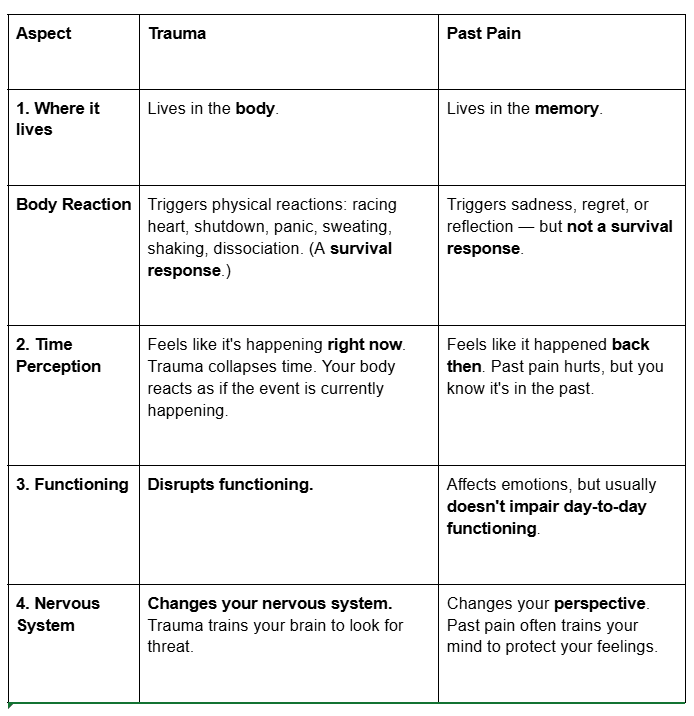
Past pain is real. It shapes your beliefs, expectations, and behaviors. But it doesn't typically create ongoing physiological threat responses. Past pain may make you feel sad or sensitive, but it usually doesn't impair day-to-day functioning.
What Is Trauma?
Trauma is a wound -- emotional, psychological, or physical -- caused by experiences that overwhelmed your ability to cope and left your nervous system stuck in survival mode.
Trauma isn't about the event itself -- it's about how your mind and body responded when you didn't have the ability, resources, or support to feel safe again.
Examples of trauma include:
- Abuse (emotional, physical, sexual)
- Chronic neglect
- Domestic violence
- Family chaos or unpredictability
- Medical trauma
- Accidents or sudden losses
- Betrayals that shatter safety
The Key Differences: Trauma vs. Pain
Here's where most people get confused: both hurt. Both affect you. But the pattern, intensity, and body response help you know which is which.
Signs You May Be Dealing With Trauma
If you notice these signs, you're likely experiencing trauma responses, not just emotional pain:
- You overreact or shut down quickly
- You avoid people, places, or conversations
- You feel unsafe even when nothing is happening
- Your body jumps, freezes, or goes numb
- You constantly expect something to go wrong
- Small conflicts feel like huge threats
- Your emotions feel "too big" or impossible to manage
With trauma, you might see:
- Sleep issues
- Hypervigilance
- Avoidance
- Numbing
- Intense emotional reactions
- Difficulty trusting
- Feeling unsafe in relationships or your own body
You're not "dramatic" or "overly sensitive." Your body is protecting you the best way it knows how.
Signs You May Be Carrying Past Pain
These patterns often indicate unresolved emotional pain rather than trauma:
- You think about old situations and still feel hurt
- You feel misunderstood or unappreciated
- You get emotional around certain memories
- You have lingering resentment
- You internalize things and personalize others' actions
- You overthink or replay past conversations
These are emotional wounds -- not physiological trauma responses.
5 Reflection Questions to Help You Identify Trauma vs. Past Pain
Use these to understand what your body and mind are trying to tell you:
- Does this memory make my body react as if I'm in danger?
- Do I feel stuck, frozen, or disconnected when I think about it?
- Is the emotion intense and overwhelming, or just uncomfortable?
- Do I try to avoid people, places, or situations because of it?
- Does this affect my daily functioning -- or just my feelings?
Your answers will guide you toward clarity.
Why the Difference Matters
Both can be healed. Both deserve attention.
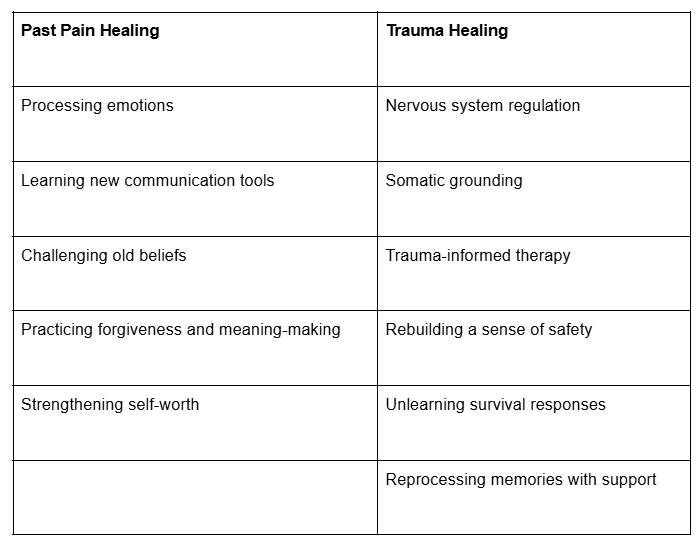
But they require different paths:
Knowing which path you're on helps you ask for the right support -- and frees you from the shame of thinking you should "just be over it."
Healing Is Not About Labeling
-- It's About Understanding
Whether you're carrying trauma or past pain, you deserve healing, support, and a safe space to explore how these experiences shaped you.
Remember:
You are not broken.
You are not "too much."
Your body and heart are doing exactly what they learned to do to keep you safe.
And now -- you're learning a new way forward.
Start Your Journey to Growth
We’re here to support you. Reach out to schedule a session or ask any questions. Let’s work together toward building stronger, healthier relationships.